How to Start Keeping Fit When You Haven't Trained in Years
The hardest session is the first one. Here is a simple, safe way to come back to fitness and actually stick with it.
Key takeaways
- Start smaller than you think: two or three short sessions a week is enough to begin.
- Aim for the WHO target of 150 minutes of moderate activity a week, built up over time.
- Consistency beats intensity. Missing one day is fine; missing two in a row is where habits break.
Maybe it was work, children, school runs or just life. Whatever the reason, years have passed since you last trained and the idea of starting again feels heavy. Good news: your body remembers more than you think, and the first few weeks are where you make the fastest progress.
The goal of this guide is not to make you sore. It is to get you moving three times a week for the next eight weeks, because that is what turns into a habit.
Step 1: Check in with your body first
If you have high blood pressure, diabetes, heart problems, joint pain, or you are pregnant, speak to a doctor before you start. It is not about permission to be scared; it is about knowing which movements to adjust. Tell your coach too, so your sessions are built around it.
Step 2: Start smaller than your ego wants
Most people quit because they start too hard, get very sore, and decide exercise is not for them. Begin with sessions of 20 to 30 minutes and finish feeling like you could have done a little more.
- Week 1–2: three sessions of brisk walking plus 10 minutes of simple bodyweight moves.
- Week 3–4: add a fourth short session or make two sessions slightly longer.
- Week 5–8: build toward 150 minutes of moderate activity across the week.
Step 3: Learn five basic movements
Almost every exercise is a version of a few basic patterns. Get comfortable with these and everything else becomes easier:
- Squat: sitting back into a chair and standing up.
- Push: a push-up against a wall, then a table, then the floor.
- Hinge: bending at the hips with a flat back, like picking up a bag.
- Lunge: a split stance, lowering the back knee.
- Carry: walking while holding something heavy, like shopping bags.
Our free 10 daily moves routine covers all of these in about 15 minutes, with a timer to follow along.
Step 4: Make it hard to skip
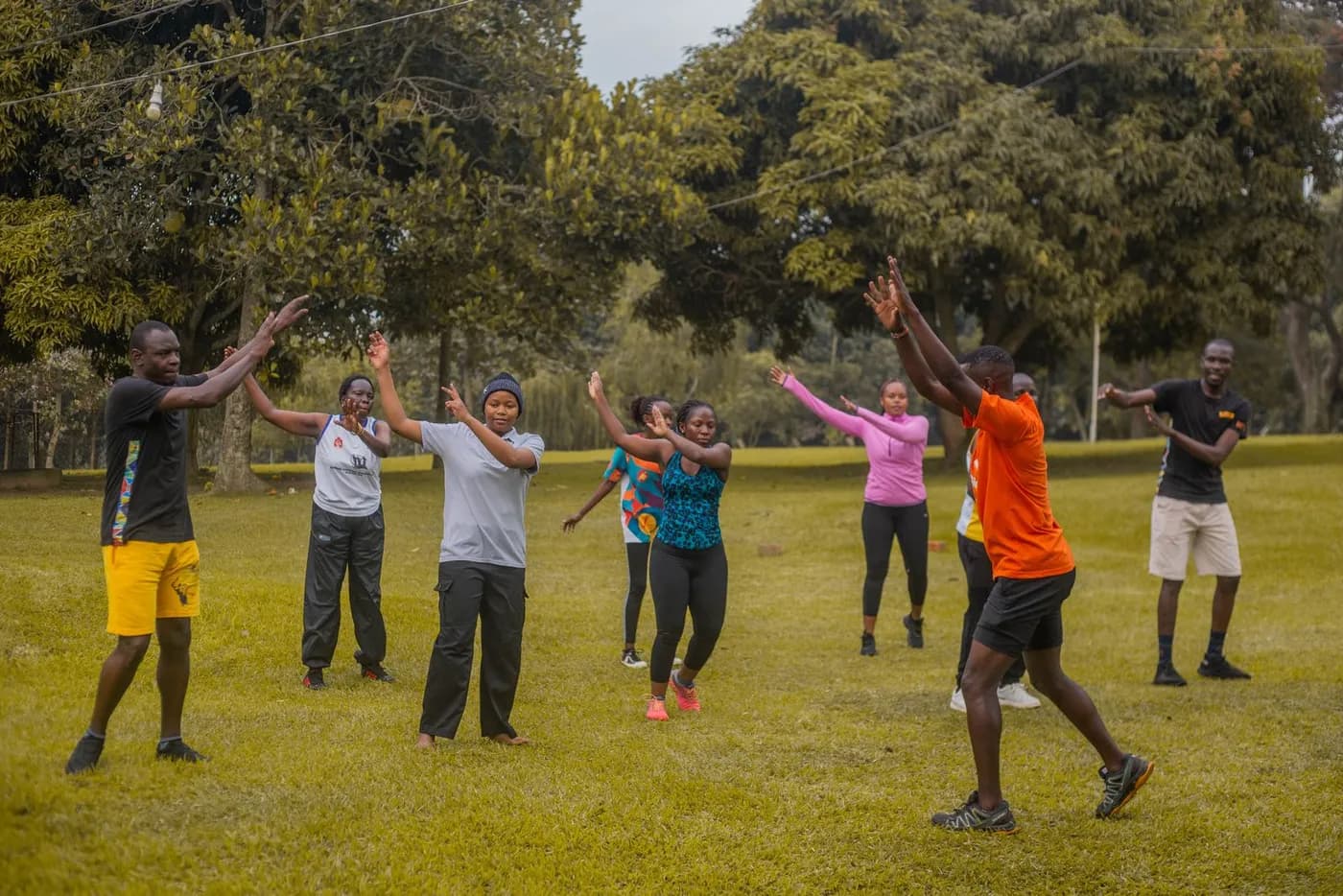
Motivation comes and goes. Systems stay. Put your sessions in your calendar like meetings, lay your kit out the night before, and train at the same time each day. Training with a group or a coach helps too, because someone notices when you are missing.
“You don't need to be extreme. You need to be consistent.”
Step 5: Measure what matters
The scale is only one number. Track how many sessions you completed, how your clothes fit, your energy, your sleep and how many push-ups you can do. Those change first, and they keep you going while the scale catches up.
What to expect in the first month
Some muscle soreness in the first week or two is normal and fades as your body adapts. Sharp pain, dizziness or chest pain are not normal; stop and get checked. By week four, most people notice better sleep, more energy and a better mood, well before they see big changes in the mirror.
Frequently asked questions
How many days a week should a beginner exercise?
Two to three sessions a week is a good start. Build toward the WHO guideline of at least 150 minutes of moderate activity per week, plus muscle-strengthening work on two days.
Is it normal to be sore after starting to exercise?
Yes. Mild soreness for a day or two after a new activity is normal and reduces as your body adapts. Sharp or joint pain is a sign to stop and get advice.
Do I need a gym to start keeping fit?
No. Walking and bodyweight exercises at home are enough to start. A gym and coach help with structure, safety and accountability as you progress.
Please note: this article is general information, not medical advice. If you have a health condition, are pregnant, or are unsure whether an activity or diet is right for you, talk to a doctor or qualified professional first.